How to start strength training in your middle years: two dumbbells and a lot of attitude
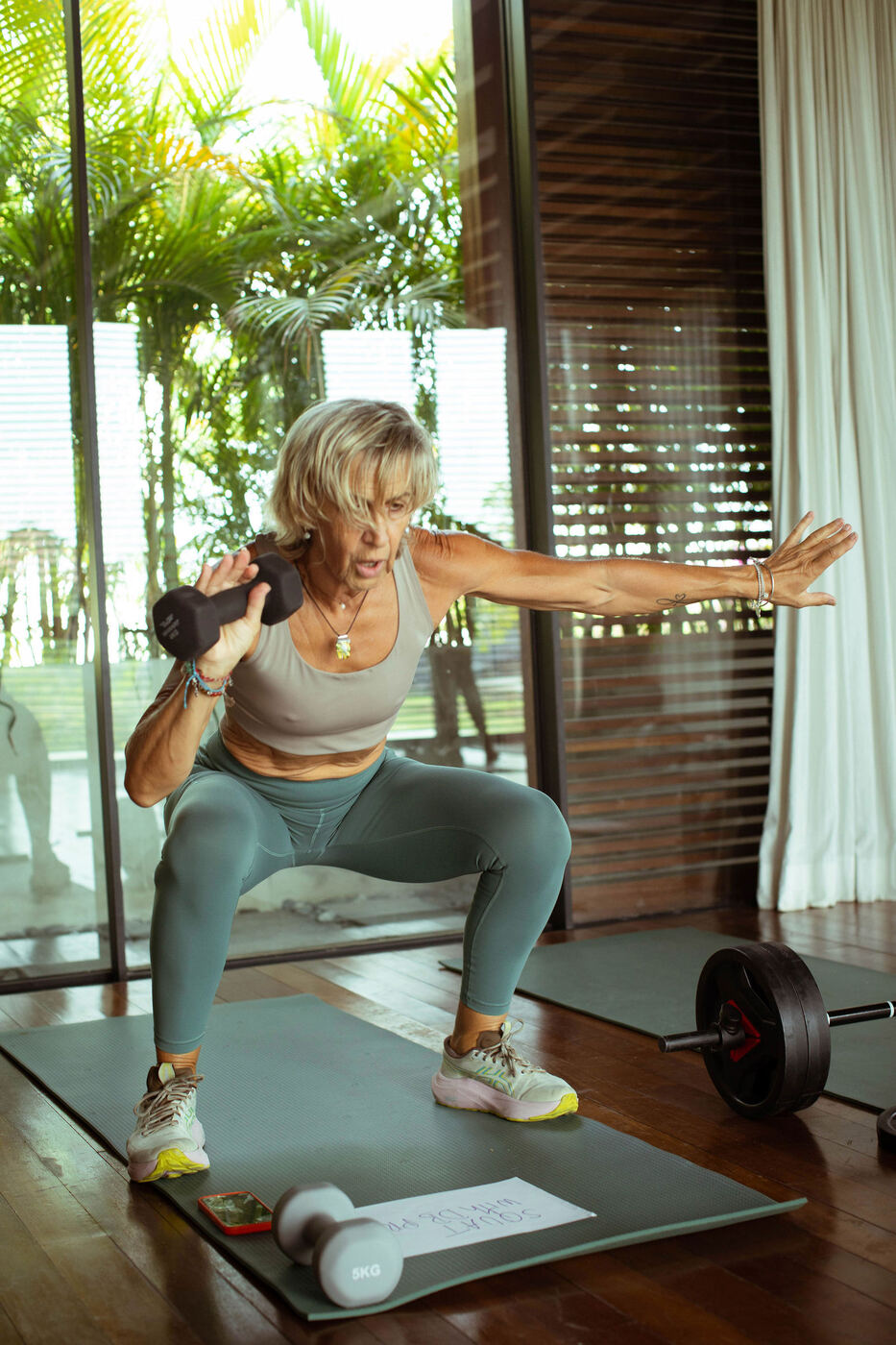
Hello, lovely. If you've been thinking about strength training but you don't know where to start, this one is for you.
I filmed the first video in a series to help you embrace strength training as we get into our middle years. I filmed it in the beautiful rice paddies of Bali, just after a downpour, and I was very careful not to fall in.
In that video I told you exactly what you need. A couple of dumbbells. A lot of attitude. And just a sense of wanting to achieve something in our older age.
That's really all it takes to begin.
Read the transcript
Hey everybody and welcome to the first of a series of videos that I'm going to be posting on my page, which I hope is going to help you embrace strength training as we get into our middle years. You are going to need a couple of dumbbells. I've got some here, they're four kilos and they're more than enough for me, and a lot of attitude and just a sense of wanting to achieve something in our older age. I'm in the beautiful rice paddies at Bali. I'm going to make sure I don't fall in. We've just had a downpour, so if this resonates with you please like, follow, share and I'll see you on the next post.
What you need to start strength training at home
You don't need a fancy gym or a room full of equipment. The dumbbells in my video are four kilos each, and they're more than enough for me.
Choose a pair you can control comfortably. Light enough to move with good form, heavy enough that you feel the work by the end of a set. If you're not sure, go lighter. You can always move up later.
Wear comfortable clothes and supportive shoes. Clear a little space on a non-slip floor. Keep some water nearby. That's your home gym sorted.
Then there's the attitude. This is the part nobody can sell you. It's the moment you decide that you are worth half an hour of your own time, and that this chapter of your life still has plenty in it.
Why strength training matters in your middle years
At this stage of life, I'm not training to be smaller. I'm training to be strong. I want to feel capable in my body, move with strength, have energy and back myself.
I like to think of every session as an investment. You're not just building muscle. You're building your future. You're building the strength to keep doing the things you love, for as long as you can.
Strength training for women over 50 isn't about chasing a younger body. It's about looking after the one you have, and enjoying what it can do.
Start light and focus on form
Here's my most important rule. Form first, weight second.
Move slowly and with control. Feel the muscles you're working. Breathe out as you push or lift, and breathe in as you lower. Keep your movements smooth, never rushed or jerky.
If you can, train in front of a mirror or film yourself on your phone. It's a lovely way to check your posture. And if anything causes pain, stop. Discomfort from effort is normal. Pain is your body asking you to change something.
If you have a health condition or an injury, or you're unsure whether strength training is right for you, please speak to your doctor before you begin.
Five simple moves for beginners
You don't need dozens of exercises. These five cover your whole body, and you can do them all with two dumbbells.
Squat
Hold the dumbbells by your sides or at your shoulders. Sit back and down as if you're lowering into a chair, then stand tall again. A real chair behind you is a perfectly good guide while you learn.
Shoulder press
Start with the dumbbells at shoulder height and press them up overhead, then lower them with control. You can do this standing or seated.
Bent over row
Hinge forward slightly from your hips with a long, flat back. Pull the dumbbells up towards your ribs, squeezing your shoulder blades together, then lower.
Romanian deadlift
Stand tall with the dumbbells in front of your thighs. Soften your knees, push your hips back and slide the weights down your legs, then drive your hips forward to stand. This one teaches you to lift things safely in everyday life.
Floor press
Lie on your back with your knees bent. Press the dumbbells up from your chest, then lower your elbows gently back to the floor.
Progressive overload, the gentle way
Once a movement feels comfortable and controlled, it's time to ask a little more of your body. That's progressive overload, and it's how midlife strength is built.
You don't have to jump straight to heavier dumbbells. Add a repetition. Add a set. Slow the movement down. Pause at the bottom of your squat. Small changes, made steadily over time, add up to real strength.
The key word is gentle. No extremes, no shame and no quick fixes.
Rest days and the days you don't feel like it
Nobody feels like training every day. I certainly don't. That's normal, and it doesn't mean you've failed.
Rest days are part of the plan. Your body gets stronger as it recovers, so give it time between strength sessions. On rest days, go for a walk or have a gentle stretch.
And on the days your motivation has packed its bags, do something small. Five minutes. One set of squats. Showing up matters more than a perfect session. Consistency, not perfection.
You don't have to do this alone
Starting something new is always easier with company. That's why I created The Wellness Investor, a membership for women 40+ built on three pillars: Connect, Move and Nourish.
In my MOVE programme you get three 30-minute pre-recorded strength workouts a week, with progressive full-body strength training made for midlife bodies. You can train at home, in your own time, with a coach in your corner.
If you'd like to dip your toe in first, start with my free 4-day strength challenge, the StrongHER Foundation. Grab your two dumbbells, bring your attitude, and I'll see you there.
Frequently asked questions
What weight dumbbells should a beginner woman over 50 use?
Choose a weight you can lift with good form for a full set, where the last few repetitions feel like work but not a struggle. In my video I use four kilo dumbbells, and they're more than enough for me. If you're unsure, start lighter. You can always move up.
How do I start strength training at home?
Find a little space, a pair of light dumbbells and a simple plan. Start with a few full-body moves such as squats, presses and rows, and focus on form before weight. My free StrongHER Foundation is a 4-day strength challenge that walks you through your first steps.
How many days a week should a beginner strength train?
Two or three sessions a week with rest days in between is a lovely place to start. My MOVE programme gives you three 30-minute workouts a week. Rest days are part of the plan, because your body gets stronger as it recovers.
What are the best strength exercises for beginners over 50?
Keep it simple: squats, a shoulder press, a bent over row, a Romanian deadlift and a floor press. Together they work your whole body, and all you need is two dumbbells. Master each movement with light weights before you add more.
How long does it take to see results from strength training?
Everybody is different, so I won't give you a number. Often the first thing you notice is that a movement feels easier, or that you feel a little more confident. Keep showing up, be patient and trust the process. Consistency, not perfection.
Further reading
- Midlife isn't about becoming smaller. It's about becoming StrongHER.Why I train to be strong, not small, and what becoming StrongHER really means in midlife.
- Your 60s aren't something to fear. They're something to step into.I'm not chasing a younger version of myself. Here's how I'm building a stronger, wiser one.
- The Wellness InvestorMy online membership for women 40+: Connect, Move and Nourish.